

Can You Replace a Roof in the Winter?
Yes, you can replace a roof in winter when weather conditions, roofing materials, and installation requirements allow. For homeowners in Tacoma, University Place, and throughout Pierce County, winter roof replacement may be a practical option when a roof is deteriorating or needs urgent attention. However, cold temperatures, rain, wind, and slippery surfaces can affect scheduling, safety, and installation procedures.
Professional roof installation requires careful planning throughout the year. A qualified roofing contractor should evaluate the roof, check the weather forecast, and follow the roofing manufacturer’s installation instructions before deciding whether work can proceed.
Can You Replace a Roof in the Winter?
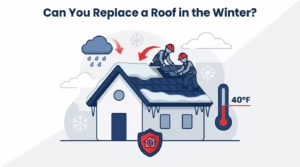
Winter roof replacement is possible, but not every day provides suitable installation conditions. Roofing crews must consider precipitation, wind, roof surface conditions, temperature, and the requirements of the materials being installed.
Before scheduling a winter project, homeowners should understand four important considerations:
- Weather: Rain, ice, strong wind, and other hazardous conditions can delay work.
- Roofing materials: Some products require specific temperature ranges or installation procedures.
- Safety: Wet or icy roof surfaces increase the risk of slips and falls.
- Weather protection: The contractor needs a plan to protect the exposed roof and home if weather changes during the project.
If your roof is leaking or has widespread deterioration, waiting until spring may not be the best option. An inspection can help determine whether a targeted repair or a full replacement is appropriate and whether the work can be completed safely during winter.
What Temperature Is Suitable for Winter Roof Installation?
There is no single temperature that applies to every roofing material or installation. The acceptable range depends on the product, the manufacturer’s instructions, the installation method, and the conditions at the job site.
Installing Asphalt Shingles in Cold Weather
Cold temperatures can make asphalt shingles less flexible and more susceptible to cracking during handling. The self-sealing strips on some shingles may also take longer to activate in colder conditions, depending on the product and weather.
Some manufacturers specify temperature-related precautions or additional installation procedures. A roofer should follow the instructions for the exact shingle product rather than relying on a universal temperature threshold.
When conditions require additional precautions, the contractor should explain how the shingles will be handled, installed, and sealed according to the manufacturer’s requirements. Do not assume that every shingle product requires the same treatment below 40 degrees Fahrenheit.
Installing Metal Roofing in Winter
Metal roofing systems do not rely on the same asphalt shingle sealing process, so some cold-weather installation considerations differ. However, metal roofing is not automatically suitable for every winter day.
Contractors must still consider safe access, precipitation, wind, material handling, fastening requirements, and the installation instructions for the selected system. The roof design and product specifications determine whether installation can proceed.
Winter Roofing Conditions in the Puget Sound Region
Winter in Tacoma, University Place, and surrounding Pierce County communities often brings rain, damp conditions, wind, and occasional freezing temperatures. These conditions can create scheduling challenges even when heavy snowfall is uncommon.
Roofing work should not proceed when active storms, icy surfaces, or other conditions create unacceptable safety risks. Contractors may need to adjust the schedule to find a suitable weather window.
Rain protection is also essential during roof replacement. Removing existing roofing exposes portions of the roof assembly, so the crew must plan how to protect the home if weather conditions change before the new roofing system is installed.
For homeowners dealing with an active leak or storm damage, our guide to emergency winter roof repairs in Tacoma explains why prompt assessment matters during the colder months.
Advantages of Winter Roof Replacement
Although winter creates additional installation challenges, replacing a roof during this season can make sense for some homeowners.
- Address existing roof damage: Replacement may prevent a deteriorating roof from remaining exposed to additional winter weather.
- Prepare for future weather: Completing the project when conditions allow can help address roofing problems before later storms.
- Explore scheduling options: Some contractors may have openings during winter, depending on demand and weather.
- Plan around an urgent need: Homeowners do not always have the option of waiting for a preferred season when a roof is failing.
These advantages are not guaranteed. Contractor availability, material supply, project complexity, and weather conditions can all affect the schedule. Winter work should be evaluated on its own merits rather than assumed to be faster or less expensive.
Winter vs. Spring and Summer Roof Replacement
| Factor | Winter | Spring and Summer |
|---|---|---|
| Weather | Rain, cold, wind, and occasional ice may restrict work. | May provide more suitable installation windows, depending on the forecast. |
| Material handling | Some products require additional cold-weather precautions. | Temperatures may be more favorable for many materials. |
| Scheduling | Availability depends on contractor demand and weather interruptions. | Popular periods may have limited scheduling flexibility. |
| Urgent roof damage | Repairs or replacement may be necessary without waiting for spring. | May be suitable for planned projects when the roof can safely wait. |
| Safety | Wet and icy conditions require particular attention. | Heat, wind, and other site conditions still require safety planning. |
There is no universally best season for every roof. If you are planning ahead, read our guide to the best time to replace your roof for a broader seasonal comparison.
Safety Considerations for Winter Roofing
Cold-weather roofing requires careful job-site planning. A professional contractor should assess the conditions before starting and throughout the project.
- Roof surface conditions: Wet, icy, or frost-covered surfaces can create fall hazards.
- Wind and precipitation: Strong wind and active storms can make roofing work unsafe.
- Temperature: Materials must be handled and installed according to product requirements.
- Daylight: Shorter winter days may affect the available working window.
- Temporary weather protection: Exposed roof areas need appropriate protection if the project is interrupted.
Homeowners should not attempt to inspect or repair a roof themselves during wet or icy weather. Leave roof access and installation work to trained professionals using appropriate safety procedures.
When Should You Avoid Waiting Until Spring?
Waiting for warmer weather may be reasonable when the roof is in stable condition and a professional confirms that the project can be scheduled safely for later. However, certain problems warrant prompt attention.
- Active leaks that continue to allow water into the home.
- Widespread missing, damaged, or deteriorating shingles.
- Significant storm damage.
- Recurring leaks in multiple areas.
- Visible sagging or other signs of possible structural damage.
These conditions do not automatically mean that a complete roof replacement is necessary. A professional inspection can help determine whether a repair will address the problem or whether the roof requires more extensive work.
Winter Roof Replacement in Tacoma and Nearby Communities
Homeowners in Tacoma, University Place, Lakewood, and surrounding Pierce County communities should base winter roofing decisions on the roof’s condition, the selected materials, and the available weather window.
Working with roofing contractors serving Lakewood can help homeowners discuss local conditions and project requirements before committing to a schedule. A contractor should explain any cold-weather precautions, potential delays, and steps for protecting the home during installation.
ACME Roofing provides roof replacement and installation services throughout Tacoma and surrounding communities. If you are unsure whether your roof can be replaced this winter, an assessment can help clarify the available options.
Schedule a Winter Roofing Estimate
A winter roof replacement can be a practical solution when the project is planned around appropriate weather, material requirements, and safe working conditions. If your roof is deteriorating or leaking, do not assume you must wait until spring to have it assessed.
Call (253) 215-1398 to schedule a free roofing estimate and discuss whether winter installation is appropriate for your home.
Frequently Asked Questions
Is it safe to replace a roof in winter?
It can be safe when conditions allow and the contractor follows appropriate safety procedures and material installation requirements. Work may need to be postponed during storms, icy conditions, or other hazardous weather.
Can asphalt shingles be installed in cold weather?
Yes, some asphalt shingles can be installed in cold weather when the manufacturer’s requirements can be met. Handling, flexibility, and sealing considerations vary by product and conditions.
Does winter roof replacement affect warranty coverage?
Warranty eligibility depends on the specific warranty terms and whether the roofing system is installed according to the manufacturer’s requirements. Ask for clarification about any cold-weather installation procedures before work begins.
Is metal roofing better for winter installation?
Metal roofing has different installation considerations from asphalt shingles, but it is not automatically the better choice for winter. Product requirements, roof design, weather, and job-site safety still determine whether installation is appropriate.
Should I wait until spring to replace my roof?
Not always. If the roof has active leaks or significant deterioration, prompt assessment is important. A contractor can help determine whether repair or replacement is needed and whether work can proceed safely during winter.
Can winter weather delay a roof replacement?
Yes. Rain, wind, freezing temperatures, and unsafe roof surfaces can interrupt work. Ask your contractor how weather delays will be handled and how exposed portions of the roof will be protected.