


How to Fix a Leaking Roof from the Inside
If you need to know how to fix a leaking roof from the inside, start by protecting people and belongings and limiting interior water damage. You may be able to manage an active leak temporarily, but an interior patch will not repair damaged shingles, flashing, or other exterior roofing materials. For a lasting solution, schedule professional roof repair.
In Tacoma, University Place, and throughout Pierce County, heavy rainfall can make roof leaks especially disruptive. If water is entering your home during a storm, focus on safe damage control until a roofer can inspect the roof and determine the cause.
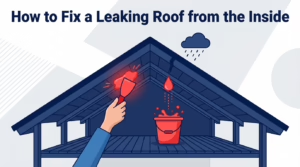
What to Do When Your Roof Leaks
A roof leak can damage ceilings, insulation, flooring, and personal belongings if water continues to collect. Before trying to locate the source, take a moment to assess the situation. Do not climb onto a wet roof, and avoid entering an attic if the space is unsafe or water is near electrical wiring.
Use these steps to limit damage while arranging a professional inspection.
Step 1: Protect People and Address Electrical Hazards
If water is near lights, outlets, wiring, or electrical equipment, stay clear of the affected area. Do not touch wet fixtures or attempt to shut off power from a wet location. Contact a qualified electrician if electrical components may have been affected. If you see a sagging ceiling, hear cracking, or suspect structural damage, keep people away from the area.
Never climb onto the roof during rain, high winds, or other unsafe conditions. Wet roofing materials can be extremely slippery.
Step 2: Catch Dripping Water and Protect Your Belongings
If the area is safe, place a bucket or waterproof container beneath the drip. Move furniture, electronics, rugs, and other belongings away from the water. Use towels to contain small amounts of water on the floor, provided there is no electrical hazard.
If water is pooling in a ceiling, do not puncture or cut the ceiling yourself. A waterlogged ceiling can fail unexpectedly, and disturbing it may release a large amount of water or debris. Keep the area clear and seek professional help.
Step 3: Document the Leak
Take photos or videos of visible water stains, dripping, damaged belongings, and the affected rooms when it is safe to do so. Note when the leak started and whether it worsens during heavy rain. This information can help a roofer investigate the problem and may be useful if you need to contact your insurer.
If you can safely observe the attic from a stable, accessible area, look for visible dampness without touching wet insulation, electrical components, or damaged materials. Do not enter an unstable attic or walk on ceiling joists without appropriate access and experience.
Step 4: Avoid Improvised Interior Roof Patches
Roofing patch compounds, caulking, and similar products are generally intended for specific materials and application conditions. Applying them to the underside of a roof deck or a wet ceiling does not reliably seal the exterior entry point. It may also conceal evidence of the leak without stopping the water.
Do not drive nails into the roof deck to redirect dripping water or apply a patch where you cannot confirm the source and suitability of the repair. These approaches can cause additional damage and should not replace a proper inspection.
Until the roof can be assessed, concentrate on protecting the interior, documenting the damage, and arranging professional assistance.
Why Roof Leaks Often Need Exterior Repairs
Water can travel along roof decking, rafters, insulation, and other materials before appearing on an interior ceiling. The location of a stain or drip therefore may not be directly beneath the point where water enters the roof.
Common causes include damaged or missing shingles, deteriorated flashing, failed seals around roof penetrations, and drainage problems. Read what can cause a roof to leak in the Puget Sound region to learn more about potential sources of recurring leaks.
Regular inspections and appropriate roof maintenance in Puyallup can help identify developing problems before they lead to more extensive interior damage.
When to Call a Roofing Professional
Arrange an inspection as soon as possible if water is actively entering your home, the leak returns, shingles appear damaged, or you notice stains spreading across a ceiling. Extensive leaks, multiple affected areas, sagging ceilings, or suspected structural damage require prompt attention.
A roofer can inspect the exterior when conditions are safe, identify the source of the leak, and recommend an appropriate repair. If the roof has widespread deterioration, the inspection can also help determine whether a targeted repair is suitable or a larger project may be necessary.
For additional guidance on preventing injuries while dealing with roofing issues, review these roof safety tips.
Schedule a Roof Leak Inspection
Interior steps can help limit water damage, but they cannot guarantee that a roof leak has been stopped. If your home in Tacoma, University Place, or elsewhere in Pierce County has a leaking roof, contact ACME Roofing to discuss an inspection and repair options.
Call (253) 215-1398 to schedule a roof inspection and address the source of the leak.
Frequently Asked Questions
Can I permanently fix a roof leak from inside?
Usually, no. Interior measures can help manage water and protect belongings, but a lasting repair generally requires identifying and correcting the exterior source of the leak.
What should I do if water is dripping through my ceiling?
If the area is safe, place a container beneath the drip and move belongings away. Keep clear of sagging ceilings and electrical hazards, document the damage, and arrange professional assistance.
Should I apply roofing cement to the underside of my roof?
Do not assume that applying roofing cement or caulking from inside will stop a leak. Products have specific applications, and an interior patch may not address the exterior entry point. Have the roof assessed before attempting a repair.
Is it safe to inspect a leaking roof during rain?
No. Wet shingles, wind, and poor visibility increase the risk of a fall. Do not climb onto the roof during a storm. Wait for safe conditions and arrange a professional inspection.
Does every roof leak mean I need a new roof?
No. Some leaks can be resolved with a targeted repair, while others indicate widespread deterioration or more extensive damage. A professional inspection can help determine the appropriate solution.