



Three Common Tacoma Attic Ventilation Myths
Attic ventilation is one of the most misunderstood components of a roofing system. Many homeowners focus on shingles and gutters while overlooking airflow inside the attic, where temperature and moisture imbalances often begin.
In Tacoma, University Place, and throughout Pierce County, persistent moisture and seasonal temperature swings make proper attic ventilation especially important. Scheduling regular roof maintenance helps catch ventilation issues before they turn into more serious problems.
Below, we address three common myths about attic ventilation and explain what homeowners should know.
Common Attic Ventilation Myths
-
Ventilation is only for hot climates
-
More vents always improve airflow
-
Ventilation is unnecessary in winter
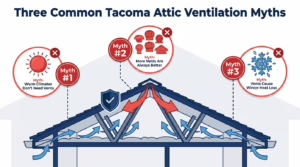
Myth #1: I Only Need Attic Ventilation in a Warm Climate
Many homeowners believe attic ventilation exists primarily to reduce heat during summer. While ventilation does help manage heat buildup, its role in moisture control is equally important.
Ventilation helps reduce temperature differentials between the attic and outdoor air. When warm, humid indoor air rises and meets cold surfaces, condensation can form. Balanced ventilation helps exhaust this moisture before it accumulates.
This makes ventilation critical in both warm and cold climates, including Western Washington.
Myth #2: More Attic Ventilation Is Always Better
It may seem logical that adding more vents increases protection. However, attic ventilation must be balanced between intake and exhaust.
Adding excessive exhaust without sufficient intake can create negative pressure. This may draw conditioned air from the home into the attic, increasing energy loss and potentially introducing additional moisture.
Effective ventilation depends on proper sizing and distribution rather than simply increasing vent count.
Myth #3: Attic Ventilation Is Only Important in Summer
Ventilation is equally important in winter. During colder months, warm indoor air rises into the attic space. If this moist air encounters cold roof decking, condensation can form.
Over time, repeated condensation may contribute to mold growth, insulation degradation, and structural concerns.
Balanced attic ventilation helps reduce trapped humidity year-round.
What Proper Attic Ventilation Looks Like
A balanced system includes:
-
Intake vents located near the soffits
-
Exhaust vents located near the roof peak
-
Even airflow distribution across the attic
The commonly referenced 1/300 guideline suggests 1 square foot of net free ventilation area per 300 square feet of attic space, though building code requirements may vary.
A professional ventilation audit can determine whether your attic airflow is properly balanced.
Attic Ventilation Evaluation in Tacoma
Attic ventilation should be evaluated as part of regular roof maintenance. Moisture and heat imbalance often go unnoticed until visible damage occurs.
If you are unsure how your system stacks up, your University-Place roofing experts can perform a ventilation audit and provide recommendations tailored to your roof and attic. For a broader look at roofing innovations and trends, see “The Future of Roofing”, which explores how roof technology, materials, and contractor practices are evolving.
ACME Roofing provides attic ventilation inspections and roofing evaluations throughout Tacoma and surrounding communities.
Call (253) 215-1398 to schedule a roof and attic ventilation assessment.
Frequently Asked Questions
Why is attic ventilation important in Tacoma?
Tacoma’s damp climate increases the risk of attic moisture buildup, making balanced ventilation essential.
Can too many roof vents cause problems?
Yes. Imbalanced intake and exhaust can reduce efficiency and create unintended airflow issues.
Does attic ventilation prevent mold?
Proper ventilation reduces trapped moisture, which may lower mold risk.
How do I know if my attic ventilation is balanced?
A roofing professional can measure intake and exhaust capacity and inspect for condensation signs.
Is attic ventilation part of roof maintenance?
Yes. Ventilation performance should be evaluated during routine roof inspections.