

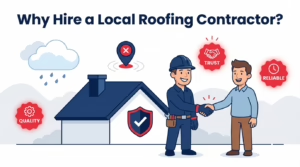
Why Hire a Local Roofing Contractor?
Hiring a local roofing contractor gives you an opportunity to work with a company familiar with the weather, housing styles, and roofing concerns common in your area. For homeowners in Tacoma and throughout Pierce County, frequent rain, wind, and seasonal moisture make it important to choose a roofer who can evaluate the roof’s condition and explain the available options. Professional roof repair can help address roofing problems before they lead to more extensive damage.
Choosing a contractor should involve more than comparing prices or selecting the first company available. Check licensing and insurance, ask about relevant experience, review written estimates, and understand the terms of any workmanship or manufacturer warranty before agreeing to a project.
1. Local Knowledge of Regional Roofing Conditions
Roofing materials and installation details need to suit the property and its exposure to local weather. In the Tacoma area, recurring rain and moisture make drainage, flashing, ventilation, and material condition important considerations.
A contractor familiar with the region may be better positioned to discuss common local roofing concerns and explain which options suit your home. However, experience and qualifications still need to be evaluated for each individual company.
For example, homeowners seeking roofing services in Bonney Lake should look for a contractor who can explain how the proposed roofing system will address the property’s specific needs.
2. Easier Access to Local References and Past Projects
A contractor who regularly works in your area may be able to provide references or examples of completed projects nearby. These can help you evaluate the company’s communication, workmanship, and reliability.
Before hiring a roofer, consider asking:
- Can you provide references from recent roofing projects?
- Have you completed projects involving my roof type or a similar roofing problem?
- Can I review examples of comparable work?
- How do you handle concerns that arise after the project is completed?
Online reviews can provide additional context, but they should not be your only source of information. Look for consistent feedback and pay attention to how the company responds to concerns.
3. Understanding Licensing and Insurance
Before work begins, verify that the roofing contractor is properly registered or licensed for the work being performed and carries appropriate insurance. Requirements depend on the jurisdiction and type of work, so confirm the applicable requirements rather than relying solely on a company’s claims.
Ask the contractor to explain what insurance coverage they carry and whether any subcontractors will be involved. You should also clarify who is responsible for permits, inspections, and other project requirements when applicable.
Learn more about what to look for in a licensed roofing contractor before choosing a company.
4. Clear Estimates and Project Expectations
A written estimate helps you understand the proposed work before making a decision. The lowest price is not always the best value if the scope is incomplete or important details are unclear.
Compare estimates for the same basic information, including:
- The roofing work and materials included
- Any removal or disposal of existing roofing materials
- How damaged decking or unexpected conditions will be handled
- Project timing and expected work duration
- Payment terms and any applicable permit costs
- Workmanship warranty terms and manufacturer warranty information
Ask questions about anything that is missing or unclear. A contractor should be able to explain the proposed work, identify known limitations, and describe how changes to the project will be approved.
5. Communication and Follow-Up Service
Roofing projects can involve decisions about materials, unexpected damage, scheduling, and weather delays. Clear communication helps you understand what is happening and what decisions you may need to make.
Before signing an agreement, ask who your main point of contact will be, how project updates will be provided, and how the company handles questions or concerns after installation or repair.
A local company’s proximity may make follow-up visits more convenient, but location alone does not guarantee faster response times or better service. Ask about the contractor’s actual scheduling and follow-up process.
6. Warranty Terms and Long-Term Accountability
Roofing warranties can differ significantly. Some cover specific manufacturing defects, while workmanship warranties address certain installation-related issues. Coverage, exclusions, duration, and maintenance requirements vary by warranty.
Ask for warranty details in writing and make sure you understand how to request service if a problem develops. Confirm whether the warranty applies to the proposed materials and installation, and whether any registration or maintenance steps are required.
Reviewing a contractor’s approach to newer roofing materials and installation practices can also help you prepare informed questions. Read more about developments in roofing technology.
7. Know When to Call a Roofing Professional
You do not need to climb onto your roof to recognize that a problem may require attention. From the ground, look for missing or visibly damaged shingles, debris from roofing materials, sagging rooflines, damaged gutters, or flashing that appears loose. Inside the home, water stains on ceilings, damp attic areas, and unexplained moisture may indicate a roofing issue.
These signs do not always reveal the exact cause. A leak, for example, may originate some distance from the interior stain. A qualified roofer can inspect the relevant areas and help determine whether repair, maintenance, or replacement is appropriate.
Avoid walking on the roof or climbing a ladder to investigate damage if you are not trained and equipped to do so. Wet roofing surfaces can be slippery, and damaged areas may be unsafe. If you notice a sagging roof or ceiling, keep people away from the affected area and seek prompt professional assistance.
Questions to Ask Before Hiring a Roofing Contractor
Use this checklist when comparing roofing companies:
- Are you properly registered or licensed for this work, and can I verify your credentials?
- Can you provide proof of appropriate insurance?
- Will I receive a written estimate describing the work and materials?
- Who will supervise the project and communicate updates?
- How will unexpected damage or additional costs be handled?
- What workmanship and manufacturer warranties apply?
- How should I contact you if a problem develops after the project?
Taking time to compare these details can help you make a more informed decision and reduce the chance of misunderstandings during the project.
Choose a Roofing Contractor in Tacoma
For homeowners in Tacoma and surrounding Pierce County communities, choosing a roofing contractor should come down to qualifications, relevant experience, clear communication, a detailed written estimate, and warranty terms you understand.
ACME Roofing provides roofing services to homeowners in Tacoma and nearby communities. If you have noticed roof damage or want to discuss your roofing needs, contact the team to learn about available options.
Call (253) 215-1398 to discuss your roofing project and request an estimate.
Frequently Asked Questions
Why should I hire a local roofing contractor?
A local contractor may be familiar with regional weather conditions, common roofing concerns, and nearby housing styles. You should still verify the company’s qualifications, insurance, references, estimate, and warranty terms before hiring.
How do I check a roofing contractor’s credentials in Washington?
Ask for the contractor’s registration or license information, as applicable, and verify it through the appropriate Washington state or local authority. Request proof of insurance and clarify who will perform the work.
Should I get more than one roofing estimate?
Comparing multiple written estimates can help you understand differences in scope, materials, timing, and price. Make sure you compare equivalent work rather than choosing solely by the lowest quoted amount.
What should a roofing estimate include?
A useful estimate should describe the work, materials, removal and disposal requirements, expected schedule, payment terms, and how unexpected repairs or added costs will be handled. Ask for clarification before signing if important details are missing.
When should I contact a roofing contractor?
Contact a professional if you notice missing or damaged roofing materials, recurring leaks, water stains, or other signs of deterioration. Avoid climbing onto the roof to investigate. If you see sagging or suspect structural distress, keep people away from the affected area and seek prompt assistance.