



How to Measure a Roof for Shingles
To measure a roof for shingles, calculate the area of each roof section, adjust for the roof’s pitch, add the sections together, and convert the total into roofing squares. Accurate measurements help you estimate material needs and reduce the risk of ordering too little or too much roofing material.
For homeowners planning a roof replacement in Tacoma, University Place, Puyallup, and surrounding Pierce County communities, the process starts with identifying each roof plane and measuring its dimensions. Roofs with hips, valleys, dormers, and multiple pitches require additional calculations. If you need accurate measurements for a roofing project, professional roof installation begins with evaluating the roof’s dimensions, condition, and material requirements.
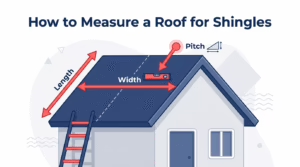
Quick Steps to Measure a Roof for Shingles
- Divide the roof into individual planes or sections.
- Measure the length and width of each section, including relevant overhangs.
- Calculate the area of each section using its dimensions.
- Adjust the measurements for the roof’s pitch to estimate the actual sloped surface area.
- Add the areas of all roof sections together.
- Divide the total roof area by 100 to calculate roofing squares.
- Determine the shingle quantity using the manufacturer’s coverage information and an appropriate allowance for cuts and waste.
A simple rectangular roof is easier to measure than a roof with several intersecting sections. Before estimating materials, account for the roof’s shape, slope, and any areas that require separate measurements.
How Do You Calculate Roof Area?
Start by dividing the roof into individual planes. For a rectangular section, multiply its length by its width to calculate the area. If the dimensions describe the horizontal footprint rather than the actual sloped roof surface, you must also account for the roof’s pitch.
For example, a rectangular roof section with a horizontal length of 40 feet and a width of 20 feet has a footprint area of:
- 40 feet × 20 feet = 800 square feet
If two identical sections have the same dimensions, their combined footprint area is 1,600 square feet. However, this is not necessarily the actual roof surface area because the slope increases the surface area relative to the horizontal footprint.
How to Account for Roof Pitch
Roof pitch describes how much a roof rises vertically over a 12-inch horizontal run. For example, a 6/12 pitch means the roof rises 6 inches for every 12 inches of horizontal distance.
When you calculate roof area from horizontal measurements, use the pitch to estimate the actual sloped surface area. A common pitch adjustment formula is:
Pitch adjustment factor = √(12² + rise²) ÷ 12
In this formula, the rise is the vertical rise in inches over a 12-inch horizontal run. Multiply the horizontal footprint area by the resulting factor to estimate the sloped surface area for a consistently pitched roof section.
For example, a 6/12 pitch has an adjustment factor of approximately 1.118. An 800-square-foot horizontal footprint would therefore correspond to approximately 894 square feet of sloped roof surface, assuming the dimensions represent the full horizontal footprint of that roof section and the pitch is consistent.
For roofs with different pitches, calculate each section separately using its own measurements and pitch adjustment. Do not apply one pitch factor to the entire roof if the sections have different slopes.
Measuring pitch may require specialized tools or access to elevated areas. Avoid climbing onto a roof to obtain measurements when doing so would be unsafe. A roofing professional can evaluate the roof’s dimensions and pitch without requiring you to work on a steep or slippery surface.
What Tools Do You Need to Measure a Roof?
- Tape measure or appropriate distance-measuring tool
- Calculator
- Paper or a roof diagram for recording dimensions
- Level and pitch-measuring tool, when appropriate and safe to use
A roof diagram can help you label each section, record its dimensions, and avoid counting the same area twice. For complicated roof designs, professional measurement tools can help establish a more reliable estimate.
How to Measure a Hip Roof for Shingles
A hip roof has multiple sloping planes that meet along hips and ridges. Instead of treating the roof as one rectangle, identify each plane and calculate its area separately.
- Sketch the roof and identify each individual sloped plane.
- Record the dimensions needed to calculate each section’s area.
- Determine the pitch of each section.
- Calculate the actual sloped surface area of each plane.
- Add the areas together to estimate the total roof surface.
- Divide the total square footage by 100 to calculate roofing squares.
Hip roofs may require additional measurements because their planes have different shapes and meet at angles. Dormers, multiple pitches, and other architectural features can make a simple estimate less reliable. A professional measurement is useful when the roof geometry is difficult to calculate from the ground.
How to Measure a Roof With Valleys, Dormers, and Multiple Sections
Roofs with valleys, dormers, additions, and intersecting sections require more detailed measurements than a basic rectangular roof. Divide the roof into manageable planes, calculate each section, and check that all roof areas are included without overlap or double counting.
Roof Valleys
A valley is where two sloping roof planes meet. Calculate the area of each plane separately, including the surface that extends toward the valley. The valley itself is not an additional roof plane to count a second time.
Dormers and Additions
Measure dormers and additions separately when they create distinct roof planes. Include their sloped surfaces and account for the way they connect to the main roof. Avoid adding the same area twice where roof sections intersect.
For complex roof designs, a ground-level estimate may miss details that affect material requirements. A professional roofer can evaluate the layout, pitch, and individual sections to provide a more reliable measurement.
How to Calculate Shingles for a Roof
Once you know the total roof surface area, convert it into roofing squares. Then use the coverage information for your chosen shingle product to estimate how many bundles or packages you need.
What Is a Roofing Square?
One roofing square represents 100 square feet of roof surface. Divide the total measured roof area by 100 to determine the number of roofing squares.
For example, if the estimated roof surface area is 2,500 square feet:
- 2,500 square feet ÷ 100 = 25 roofing squares
This calculation gives you the roof area in squares. It does not include any additional material that may be required for cuts, waste, starter strips, ridge caps, or other installation components.
How Many Shingle Bundles Do You Need?
The number of shingle bundles depends on the specific product and its stated coverage. Check the manufacturer’s packaging or product specifications to determine how much roof area each bundle covers. Do not assume that every shingle product has identical coverage.
For a basic estimate, divide the roof’s total surface area by the coverage per bundle. Round up to a whole bundle, then account separately for the additional materials and waste allowance recommended for the product and roof design.
For example, if a product covers 33.3 square feet per bundle, a 2,500-square-foot roof would require approximately 76 bundles before adding an allowance for cuts and waste. The actual order should be based on the manufacturer’s stated coverage, packaging, and the requirements of the specific installation.
How Much Extra Material Should You Order?
The material allowance depends on the roof’s complexity and the roofing product. A simple roof with few obstructions may require less cutting than a roof with several hips, valleys, dormers, and intersecting planes.
Ask your roofing contractor or follow the manufacturer’s recommendations to establish an appropriate allowance. Also account for other components needed to complete the roof system, rather than estimating shingles alone.
If you are comparing options for an existing shingle roof, review the pros and cons of layering roof shingles before deciding how to approach the project.
Common Mistakes When Measuring a Roof for Shingles
- Ignoring roof pitch: Horizontal footprint measurements can underestimate the actual sloped surface area.
- Missing roof sections: Dormers, additions, and smaller planes can be overlooked if you measure the roof as one large shape.
- Counting areas twice: Intersections between roof planes should not be treated as additional roof surface.
- Confusing roofing squares with bundles: A roofing square measures 100 square feet, while bundle coverage depends on the specific product.
- Forgetting cutting waste: The amount of extra material needed varies with the roof layout and installation requirements.
- Taking unsafe measurements: Do not climb onto a steep, wet, or otherwise hazardous roof just to estimate material quantities.
When Should You Have a Professional Measure Your Roof?
A rough estimate can help with early project planning, but professional measurements are especially useful when a roof has multiple pitches, valleys, dormers, unusual shapes, or difficult access.
A roofing contractor can assess the roof’s dimensions, existing materials, layout, and installation requirements before preparing a material estimate. This can help reduce measurement errors and account for components beyond the shingles themselves.
For homeowners planning roofing services in Tacoma, local weather exposure and the roof’s existing condition are also relevant when evaluating a replacement project. If you’re investigating a roof problem before deciding on next steps, read our guide to common causes of roof leaks in the Puget Sound.
Need Help Measuring Your Roof?
Accurate roof measurements are an important part of planning a shingle replacement or new roof installation. ACME Roofing serves homeowners in Tacoma, University Place, Puyallup, and surrounding Pierce County communities. Our team can help evaluate your roof, discuss material requirements, and plan the next steps for your project.
Call (253) 215-1398 to discuss your roofing project and request a free estimate.
Frequently Asked Questions
How do I measure a roof for shingles without climbing onto it?
You can develop a rough estimate using suitable ground-level measurements, a roof diagram, or other reliable dimensional information. Account for the roof’s pitch and individual sections. For complicated roofs or measurements that cannot be obtained safely, ask a roofing professional for assistance.
How do I calculate how many shingles I need?
Calculate the total sloped roof surface area, divide it by 100 to determine roofing squares, and use the manufacturer’s coverage information to estimate the number of bundles. Add an appropriate allowance for cuts, waste, and other installation requirements.
How do I measure a hip roof for shingles?
Divide the hip roof into individual sloped planes, measure each section, account for its pitch, and add the surface areas together. Divide the final square footage by 100 to calculate roofing squares.
How do I calculate roof area when the roof has different pitches?
Calculate each roof section separately using its dimensions and pitch. Apply the appropriate pitch adjustment to each section’s horizontal footprint area, then add the resulting sloped surface areas together.
What is the difference between a roofing square and a shingle bundle?
A roofing square represents 100 square feet of roof surface. A shingle bundle is a package of material with coverage determined by the specific product. Use the manufacturer’s coverage information to calculate how many bundles are needed for the measured roof area.