


If you are asking why your shingles are curling, it usually means your roof is experiencing age related wear, ventilation problems, or installation issues. Curling shingles are not just cosmetic. They can reduce your roof’s ability to shed water properly and may signal that the roofing system is nearing the end of its service life.
In Western Washington’s damp climate, moisture control is critical. Homeowners in Tacoma, University Place, and throughout Pierce County should address curling shingles early to prevent leaks and structural damage.
Curling shingles often start as a small cosmetic issue but if left unchecked, they can lead to leaks, decreased protection, and ultimately full roof breakdown. To prevent that, a timely roof repair can make a real difference.
Why Shingles Curl
-
Aging and asphalt shrinkage
-
Poor attic ventilation
-
Improper installation
-
Heat and moisture stress
Common Reasons Asphalt Shingles Curl
1. Roof Age
As shingles age, the asphalt layer can lose flexibility. Over time, exposure to sunlight and weather cycles causes materials to dry out and shrink, leading to curling at the edges.
If your roof is approaching the later portion of its expected lifespan, curling may indicate replacement planning should begin.
2. Poor Attic Ventilation
Inadequate attic ventilation allows heat and moisture to build up beneath the roof deck. Excess heat can accelerate asphalt deterioration, while trapped humidity may affect the structural integrity of roofing materials.
Balanced intake and exhaust ventilation is critical for maintaining shingle performance.
3. Improper Installation
Incorrect nail placement, poor alignment, or failure to follow manufacturer guidelines can cause premature shingle distortion. Improper installation may also impact warranty eligibility.
If installation issues are suspected, a professional inspection can determine whether localized repair or broader correction is necessary.
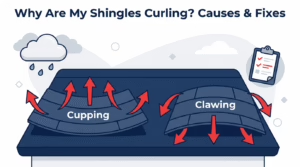
Cupping vs Clawing: What’s the Difference?
Cupping
Cupping occurs when the edges of a shingle curl upward while the center remains flat. This is commonly associated with aging or long term heat exposure.
Clawing
Clawing occurs when the edges curl downward and the middle of the shingle lifts slightly. This pattern is often associated with prolonged heat exposure and attic moisture imbalance.
Identifying the pattern helps determine whether the issue is surface aging or related to ventilation problems.
Can Curled Shingles Be Repaired?
In most cases, curling shingles cannot simply be glued back into place. As asphalt materials age, they lose flexibility and become brittle. Attempting to force them flat may cause cracking.
If only a small number of shingles are affected, localized replacement may be possible. However, widespread curling typically indicates systemic aging, and roof replacement may be the more durable solution.
Does Insurance Cover Curling Shingles?
Homeowners insurance generally covers sudden and accidental damage caused by covered perils such as wind or falling debris. It typically does not cover gradual wear and tear or age related deterioration.
If curling is associated with a recent storm event, an inspection can help determine whether a claim may be appropriate. We can help you assess the cause during an inspection, whether you need roofing help in Artondale or anywhere in Tacoma.
Why It Is Important to Address Curling Shingles
When shingles begin to curl:
-
Edges become more vulnerable to wind uplift
-
Underlayment may become exposed to moisture
-
Protective granules may shed more rapidly
-
Minor damage can escalate into leaks
Early inspection helps determine whether a repair or full replacement is the most cost effective option.
If you’re seeing signs of curling shingles, you may want to read “Why Roofs Fail and How to Avoid This” — it covers the broader causes of roof failure and how to address them before small issues become large ones.
Schedule a Roof Inspection
Curling shingles are often an early warning sign. A professional inspection can identify whether the issue is isolated or part of broader roof deterioration.
ACME Roofing provides roof repair and roof replacement services throughout Tacoma and surrounding communities.
For residents in the region, trust your University‑Place roofing experts to inspect, diagnose, and repair curling shingles before the damage spreads.
Call (253) 215-1398 to schedule a roof evaluation and prevent small problems from becoming major repairs.
Frequently Asked Questions
Why are my shingles curling after only a few years?
Premature curling can be caused by poor attic ventilation, improper installation, or manufacturing defects.
Is shingle curling a sign I need a new roof?
If curling is widespread, it often indicates aging and may signal the need for replacement. Isolated curling may be repairable.
What is the difference between cupping and clawing shingles?
Cupping involves edges turning upward. Clawing involves edges curling downward while the center lifts.
Can ventilation problems cause shingles to curl?
Yes. Excess attic heat and moisture can accelerate asphalt deterioration.
Will wind damage make shingles curl?
Wind typically lifts or tears shingles. Curling is more commonly associated with aging or heat related stress.