


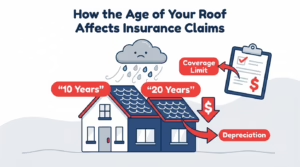
How Roof Age Affects Insurance Claims
If your roof is damaged and you file an insurance claim, the age of your roof can affect how the claim is evaluated and how much your insurer may pay. Older roofs may have different settlement terms, depreciation considerations, inspection requirements, or coverage restrictions depending on the policy.
Navigating an insurance claim for roof repair can be complicated, especially when you are also trying to determine whether the damage resulted from a covered event or normal aging. Understanding how roof age factors into insurance decisions can help homeowners in Tacoma, Pierce County, and surrounding communities prepare for the claims process.
How Does Roof Age Affect Insurance Claims?
Roof age can affect an insurance claim in several ways. An insurer may consider the roof’s age, condition, material, maintenance history, policy terms, and the cause of the damage when evaluating a claim.
- Older roofing materials may have greater depreciation.
- An actual cash value policy may deduct depreciation from a covered loss.
- Normal wear and tear is generally treated differently from sudden damage caused by a covered event.
- Some insurers may have additional requirements for older roofs.
- The specific policy determines what is covered and how a covered loss is settled.
Roof age alone does not determine whether an insurance claim will be approved. The policy language and circumstances surrounding the damage are important factors.
How Long Does a Roof Typically Last?
Roof lifespan varies significantly based on the roofing material, installation quality, maintenance, climate, weather exposure, and other conditions. For that reason, there is no single lifespan that applies to every roof.
For example, an asphalt shingle roof and a properly maintained metal roof can have very different expected service lives. Even two roofs made from the same material can age differently depending on installation, ventilation, weather exposure, and maintenance.
Insurance companies may consider the roof’s age alongside its current condition rather than relying solely on the original installation date.
How Insurance Companies Evaluate Roof Age
When evaluating a roof-related claim, an insurer may consider whether the reported damage resulted from a covered event or from deterioration that occurred over time.
For example, damage caused by a covered windstorm may be evaluated differently from shingles that have gradually deteriorated because of age. The distinction matters because homeowners insurance policies generally do not treat ordinary wear and tear in the same way as sudden damage from a covered peril.
The insurer may also consider the roof’s condition before the reported event. Documentation showing previous inspections, maintenance, or repairs can help establish the roof’s condition and history.
Actual Cash Value vs. Replacement Cost Coverage
One of the most important factors affecting a roof insurance claim is how the policy settles a covered loss. Two terms homeowners may encounter are Actual Cash Value and Replacement Cost Value.
What Is Actual Cash Value?
Actual Cash Value, or ACV, generally accounts for depreciation when determining the amount payable for a covered loss.
For an older roof, depreciation can reduce the amount paid under an ACV settlement because the insurer considers the age and remaining value of the damaged property.
The exact depreciation calculation depends on the policy and insurer. Homeowners should review their policy or speak with their insurance company if they are unsure how a roof claim will be settled.
What Is Replacement Cost Coverage?
Replacement Cost coverage generally provides for the cost to repair or replace covered property without the same depreciation deduction used in an ACV settlement, subject to the policy’s limits, deductible, conditions, and exclusions.
Replacement cost coverage does not mean every roof replacement is automatically covered. The damage still needs to qualify under the policy, and the insurer may apply other limitations or requirements.
Does Insurance Stop Covering Older Roofs?
There is no single nationwide roof-age cutoff that automatically determines whether homeowners insurance will cover a roof. Requirements vary between insurers and policies.
Depending on the insurer and policy, an older roof may result in:
- An inspection requirement
- Different coverage terms
- Actual cash value settlement for certain roof losses
- Higher premiums or different underwriting requirements
- Requests for repairs or documentation before coverage continues
Because insurance requirements can change and differ between policies, homeowners should not assume that a specific roof age automatically means they are uninsured.
What Other Factors Affect Roof Insurance Coverage?
Roof age is only one factor that may affect how an insurer evaluates a roof.
Roof Condition
The condition of the roof can be important when an insurer evaluates a claim. Missing or damaged shingles, deterioration, structural concerns, and previous repairs may all be relevant to understanding the roof’s condition.
Roofing Material
Different roofing materials have different characteristics, expected service lives, and maintenance requirements. An insurer may use the roofing material as part of its risk evaluation or coverage requirements.
Maintenance History
Regular maintenance and documentation can help establish how the roof was cared for before a loss occurred. Keep records of inspections, repairs, invoices, and other relevant roofing work.
Cause of Damage
The cause of the damage is another important consideration. A roof damaged by a covered event may be treated differently from a roof that has deteriorated gradually because of age, neglect, or normal wear.
What Types of Roof Damage May Be Covered?
Whether a particular type of damage is covered depends on the policy and the circumstances of the loss. Depending on the policy, covered perils can include certain sudden events such as:
- Wind damage
- Hail damage
- Fire damage
- Damage from a fallen tree or other covered debris
Even when an event is generally listed as a covered peril, the specific circumstances and policy exclusions still matter. A homeowner should review the policy and claim determination rather than assume that every type of damage from the event is covered.
How to Prepare for a Roof Insurance Claim
Good documentation can make it easier to explain your roof’s condition and repair history when you need to file a claim.
- Keep records showing when the roof was installed or replaced.
- Save invoices and receipts for roof repairs and maintenance.
- Keep copies of professional inspection reports.
- Photograph the roof and other relevant areas when conditions are safe.
- Review your insurance policy before a loss occurs so you understand applicable deductibles, limits, exclusions, and settlement terms.
- Document new damage promptly after a storm or other suspected covered event.
Maintaining these records can help you provide your insurer with information about the roof’s age, condition, and history if you need to file a claim.
What Should You Do If Your Roof Insurance Claim Is Denied?
If an insurer denies a roof damage claim, start by reviewing the denial letter and the relevant sections of your policy. The denial should provide information about why the insurer determined that the reported loss was not covered.
- Review your insurance policy and the denial letter.
- Ask your insurer to explain the specific reason for the denial.
- Gather photographs, inspection reports, repair records, invoices, and other documentation related to the roof.
- Ask whether the insurer offers a formal reconsideration or appeal process.
- Keep records of communications with the insurance company.
- If you believe the claim was improperly denied, consider contacting the appropriate state insurance regulator or speaking with an attorney about your options.
If a second inspection is scheduled, you may also want your roofing contractor to document the roof’s condition and the observed damage separately from the insurance inspection.
Why Professional Roof Documentation Matters
A professional roofing assessment can help document the condition of a roof and identify visible damage. This information can be useful when you are trying to understand what repairs may be necessary or when you need supporting documentation for an insurance claim.
For homeowners in the Tacoma area, working with a contractor familiar with local roofing conditions can also make the inspection and repair process easier to manage.
If you’re evaluating roofing work and want to understand the benefits of working with someone familiar with your area, read our guide on why hiring a local roofing contractor can help.
Roof Age and Insurance: What Homeowners Should Remember
Your roof’s age can influence how an insurer evaluates risk, coverage, depreciation, and a potential claim, but age alone does not determine the outcome of every claim.
The most important factors to understand are your policy’s settlement terms, the roof’s current condition, the cause of the damage, applicable exclusions, and the documentation available to support your claim.
Homeowners in the South Sound can also benefit from keeping their roof maintained and addressing problems before they become more extensive. If you need professional assistance with a roof that has sustained damage, ACME Roofing can help evaluate the condition of the roof and determine what work may be needed.
For homeowners looking for roof repair in Artondale, ACME Roofing can help assess roofing concerns and provide documentation for the repair process.
Keep Your Roof in Good Condition with ACME Roofing
Routine inspections and timely repairs can help homeowners stay informed about their roof’s condition as it ages. Keeping records of roofing work can also give you useful documentation if you need to discuss a future insurance claim.
ACME Roofing serves homeowners throughout the South Sound and can help with roof repairs, inspections, and replacement projects.
Call (253) 215-1398 to discuss your roofing needs and request a free estimate.
Frequently Asked Questions
Does insurance cover roof damage from age?
Homeowners insurance generally does not cover normal wear and tear or deterioration simply because a roof has become old. Coverage for sudden damage depends on the policy and whether the cause of the damage is a covered peril.
What is actual cash value for a roof insurance claim?
Actual Cash Value, or ACV, generally factors depreciation into the settlement for a covered loss. Because depreciation can increase as property ages, an older roof may receive a lower payment under an ACV settlement.
Is there an age limit for roof insurance coverage?
There is no universal roof-age limit that applies to every homeowners insurance policy. Individual insurers may have their own underwriting requirements, inspection requirements, or coverage limitations for older roofs.
What happens if my roof insurance claim is denied?
Review the denial letter and your policy, ask the insurer to explain the reason for the denial, and gather documentation about the roof’s condition and the reported damage. You can also ask about the insurer’s appeal or reconsideration process.
Does roof maintenance affect insurance claims?
Maintenance can be relevant when an insurer evaluates the cause and condition of roof damage. Keeping inspection, repair, and maintenance records can help document the roof’s history.