



Why Are My Shingles Curling?
If you are asking why your shingles are curling, the problem can be related to aging, installation issues, ventilation conditions, or prolonged exposure to weather. Curling shingles are more than a cosmetic concern because distorted shingles may not protect the roof as effectively as shingles in good condition.
In Western Washington, homeowners in Tacoma, University Place, and throughout Pierce County should address noticeable shingle curling early. A professional roof repair evaluation can help determine whether the problem is isolated or part of broader roof deterioration.
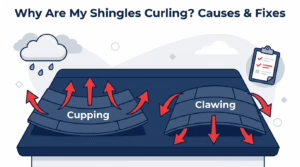
Why Are My Shingles Curling?
Several conditions can contribute to curled asphalt shingles. The most common possibilities include roof age, improper installation, ventilation concerns, and prolonged weather exposure.
1. Roof Age
As asphalt shingles age, their materials can become less flexible. Long-term exposure to sunlight, rain, wind, and temperature changes can contribute to deterioration and distortion.
If curling is appearing across a large portion of an older roof, it may be a sign that the roofing system is approaching the later portion of its service life.
2. Poor Attic Ventilation
Attic ventilation helps manage heat and moisture beneath the roof. When ventilation is inadequate, excessive heat or moisture can contribute to unfavorable conditions for the roof assembly and accelerate material deterioration.
Proper intake and exhaust ventilation should work together rather than relying on a single type of attic vent.
If you are also noticing attic moisture or ventilation concerns, learn about common Tacoma attic ventilation myths before assuming that adding another vent will solve the problem.
3. Improper Installation
Asphalt shingles must be installed according to the manufacturer’s requirements. Problems with fastening, alignment, placement, or installation conditions can contribute to premature shingle problems.
If shingles begin curling relatively soon after installation, an inspection can help determine whether the problem is related to installation, the roofing material, ventilation, or another condition.
4. Weather and Environmental Exposure
Roof shingles remain exposed to changing weather conditions throughout their service life. Repeated cycles of moisture, drying, temperature changes, wind, and sunlight can gradually affect roofing materials.
Weather exposure does not necessarily mean that a roof needs immediate replacement, but widespread curling deserves an evaluation to determine the extent of the deterioration.
What Does Shingle Curling Look Like?
Curling can appear in different ways depending on the condition of the shingle.
Cupping
Cupping occurs when the edges of a shingle turn upward while the center remains relatively flatter. It can become more noticeable as asphalt shingles age and deteriorate.
Clawing
Clawing occurs when the edges turn downward while the center of the shingle lifts. Like other forms of shingle distortion, clawing should be evaluated in the context of the roof’s age, installation, ventilation, and overall condition.
Identifying the appearance of the curling can help a roofing professional determine what additional conditions should be investigated.
Can Curled Shingles Be Repaired?
Curled shingles cannot always be restored simply by forcing them flat. Older or brittle shingles may crack when manipulated, and a repair that addresses only the visible distortion may not resolve the reason the shingles deteriorated.
If only a small number of shingles are damaged and the surrounding roof remains in good condition, localized replacement may be possible. The appropriate repair depends on the extent and cause of the damage.
When curling is widespread, an inspection should determine whether the roof can be repaired or whether replacement would provide a more reliable long-term solution.
When Do Curling Shingles Mean You Need a New Roof?
Curling shingles do not automatically mean that an entire roof needs to be replaced. The decision should take into account the extent of the curling, the roof’s overall condition, its age, and whether other problems are present.
Replacement becomes more likely when curling occurs across large areas of the roof or appears alongside other signs of deterioration such as missing shingles, exposed roofing materials, recurring leaks, or widespread granule loss.
A professional inspection can distinguish between an isolated repair issue and broader deterioration.
Does Insurance Cover Curling Shingles?
Homeowners insurance generally distinguishes between sudden damage from a covered event and deterioration that occurs through normal aging or wear. Whether a particular claim is covered depends on the policy and the circumstances that caused the damage.
If curling appeared after a significant storm or another potentially covered event, document the condition and have the roof inspected. Avoid assuming that the presence of curling alone establishes whether an insurance claim will be covered.
For homeowners who need local roofing assistance, roofing help in Artondale is available as part of ACME Roofing’s service area.
Why You Should Address Curling Shingles Early
Curling can indicate that shingles are no longer performing as intended. Distorted shingles may be more vulnerable to additional weather-related damage, and deterioration can progress if the underlying cause is not addressed.
- Curled edges can affect how shingles shed water.
- Damaged or distorted shingles can become more vulnerable to wind.
- Deteriorating shingles may contribute to moisture intrusion.
- Widespread curling can indicate that the roof needs more than a localized repair.
Addressing the problem early can help determine whether a smaller repair is possible before additional roofing components are affected.
For a broader look at conditions that can contribute to roof deterioration, read why roofs fail and how to avoid common roofing problems.
Schedule a Roof Inspection in Tacoma
If you notice shingles curling at the edges, do not assume the cause is simply old age. A professional inspection can evaluate the shingles, roof assembly, ventilation conditions, and other potential causes.
ACME Roofing provides roof repair and roof replacement services throughout Tacoma and surrounding Pierce County communities.
Call (253) 215-1398 to schedule a roof evaluation and determine the appropriate next step for your curled shingles.
Frequently Asked Questions About Curling Shingles
Why are my shingles curling after only a few years?
Premature curling can have several possible causes, including installation problems, ventilation concerns, material issues, or environmental exposure. An inspection is needed to determine the specific cause.
Is shingle curling a sign I need a new roof?
Not necessarily. Localized curling may be repairable, while widespread curling can indicate more extensive deterioration. The roof’s overall condition should be evaluated before deciding between repair and replacement.
What is the difference between cupping and clawing shingles?
Cupping generally describes shingle edges curling upward, while clawing describes edges turning downward with the center lifting. Both forms of distortion warrant evaluation when they become noticeable.
Can ventilation problems cause shingles to curl?
Ventilation conditions can contribute to heat and moisture problems within an attic and may affect the long-term condition of roofing materials. Proper intake and exhaust ventilation should be evaluated when ventilation is suspected.
Will wind damage make shingles curl?
Wind can lift, loosen, or damage asphalt shingles. Curling is more commonly associated with deterioration and other underlying conditions, although a roof inspection can help determine whether a recent weather event contributed to the damage.